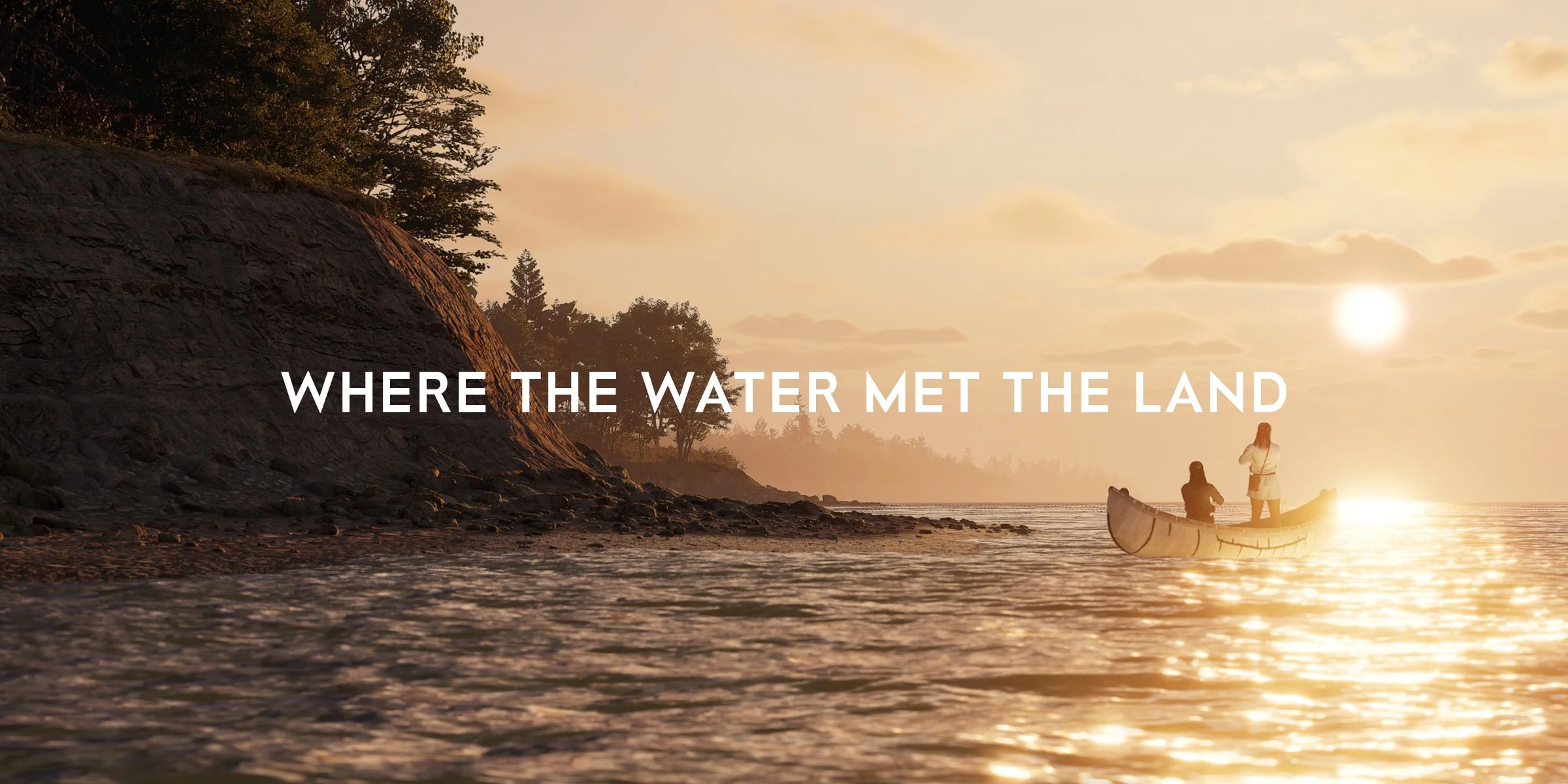
In partnership with the Toronto History Museums, Surface Impression, and the Digital Museum of Canada, we are so thrilled to launch our virtual tour, ‘Where the Water Met the Land!”
It is a unique project that allows you to step back in time and see how Toronto’s landscape has changed within the last ~thirteen thousand years!
It is a progressively immersive online experience that focuses on two national historic sites that both, once shockingly, sat at water’s edge: Fort York & Spadina Museum.
At each site, standing on their historic battery lookouts, this tour will take you to five different points in time.
Alongside observing the startling change that has happened in these two places over time, visitors can click on information points and learn more about what they are seeing while they time travel.
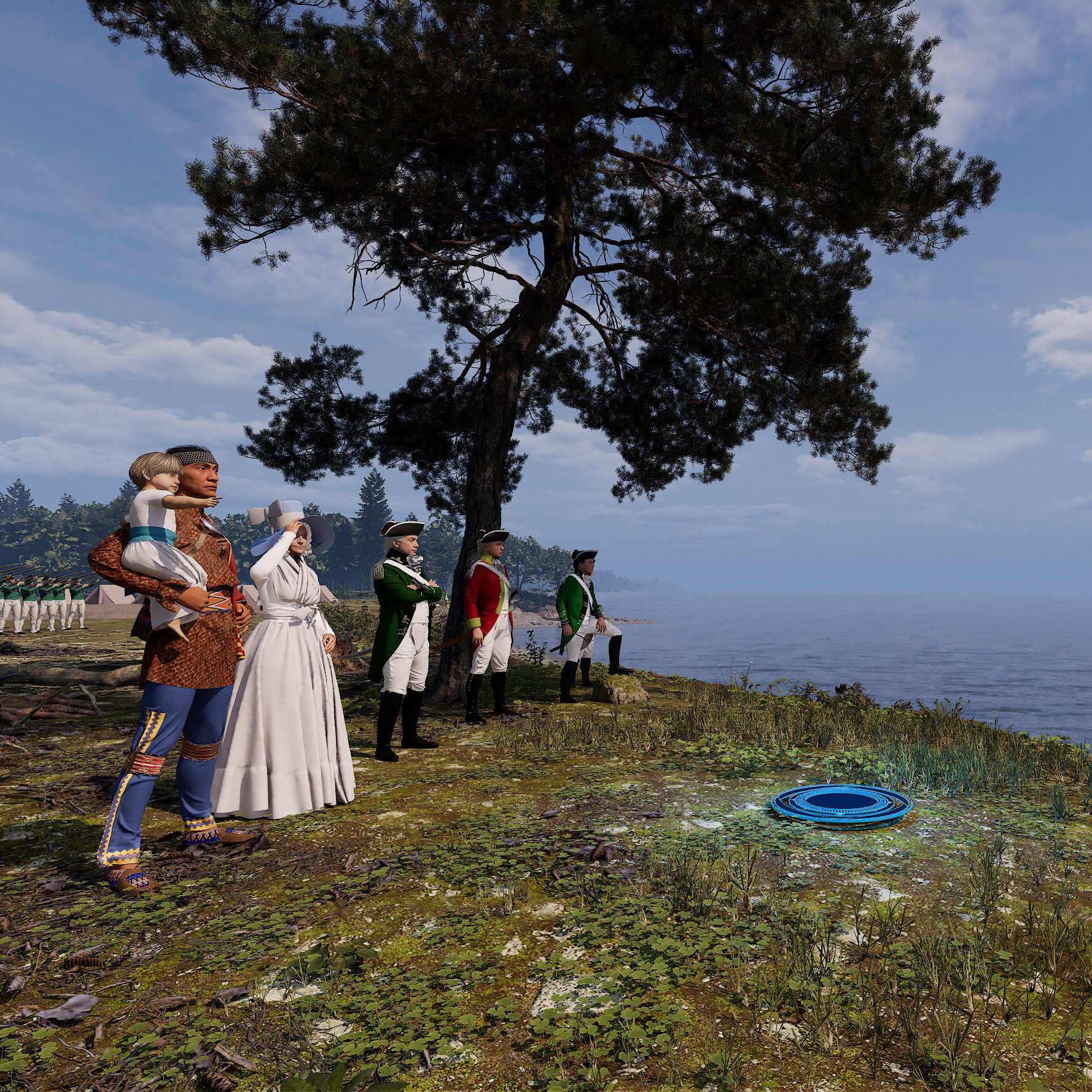
FORT YORK
Travel back in time at Fort York and see how it once looked before infill, back when it sat on the water’s natural edge. Travel forward in time to an envisioned Toronto as dreamt up by kids at CampTO!
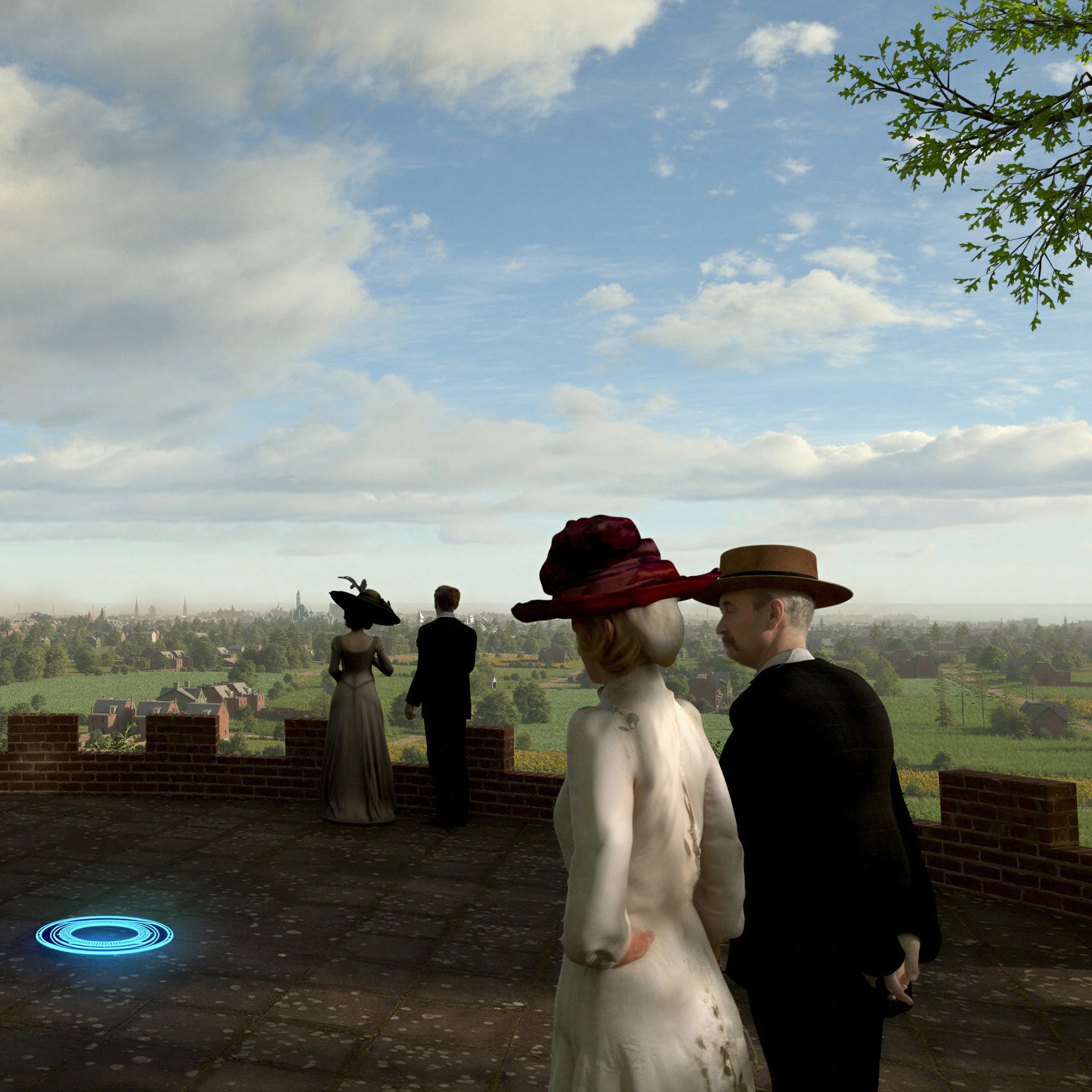
SPADINA MUSEUM
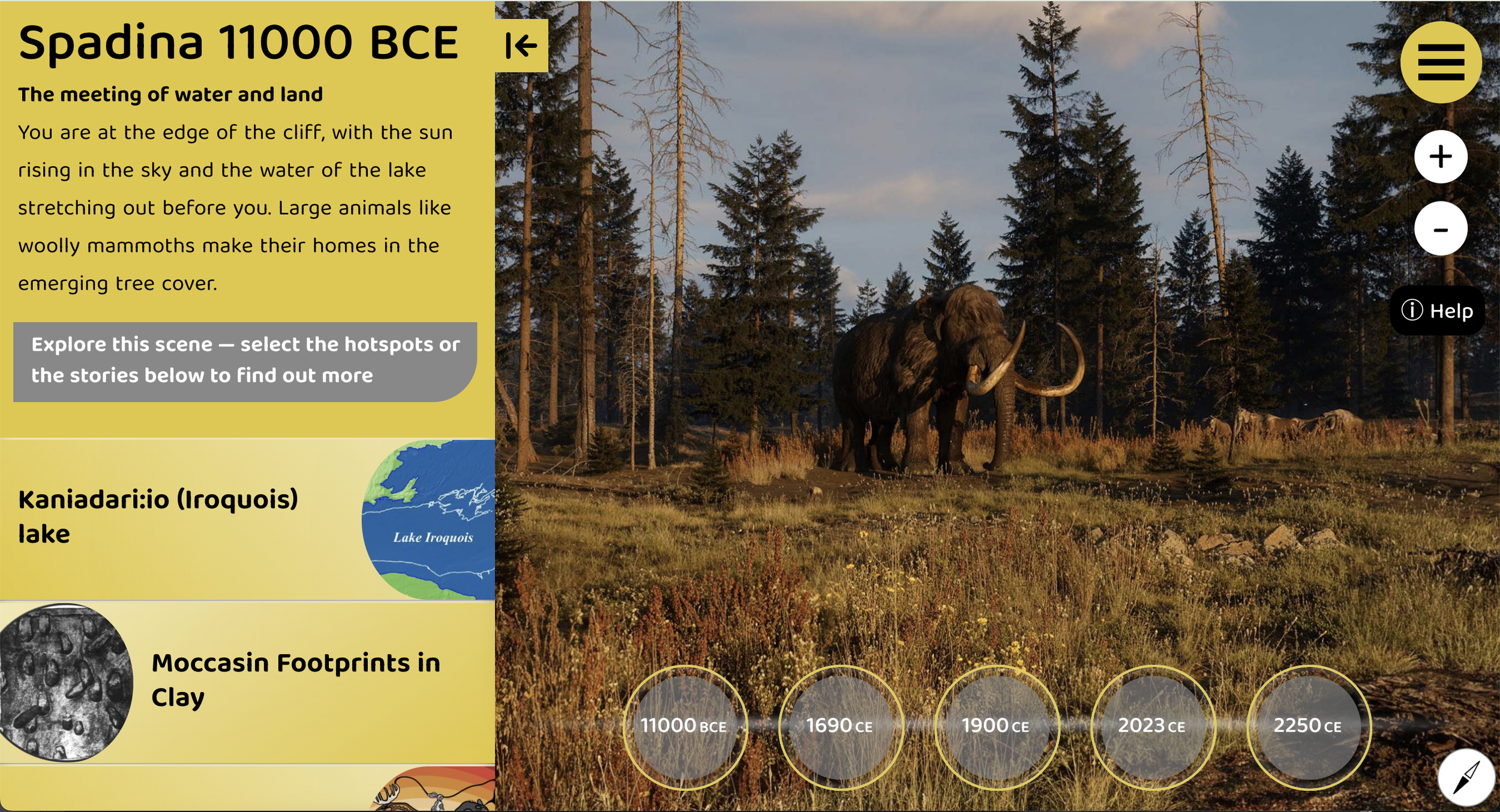
Jump forward in time to an envisioned Toronto, as dreamt up by kids at CampTO. Go back as far as 11,000 years to see what it would have looked like when the water went all the way up to Spadina Museum!
Our project’s main goals were: To share an Indigenous interpretation of water responsibilities from an Indigenous lens, To explore the significant environmental impact of colonization on the water, land, and ecosystems; To recognize the importance of both the natural and man-made environment in creating an equitable society, and to advance environmental empowerment and sustainable tourism to safeguard Toronto’s cultural and natural heritage.
One of the most important fundamental teachings we learned throughout this project is the Seven Generations Principle.
This is a critical idea rooted in the Haudenosaunee Confederacy from the Great Law of Peace. Its central tenet states: "In our every deliberation, we must consider the impact of our decisions on the next seven generations.”
And so, this tour doesn’t just include going backward in time, we also go forward!
We created a series of workshops for kids through the CampTO program where they could help us envision a future Toronto. The future views within this tour were inspired by those workshops with kids that spanned over a couple years.
OUR PROJECT MISSION:
To create an exhibit that reflects Toronto’s diverse community stories, past, present, and future;
To champion the unique needs of children and youth in museums;
To create an intuitive, engaging, and relevant online user experience.
These are supported by three thematic elements:
1. Education for Reconciliation: Where the Water Met the Land will share histories of Treaties, and Indigenous Peoples historical and contemporary contributions. The future views will be inspired by children's perspectives on what reconciliation could look like in their communities.
2. The Truth is in the Water: Where the Water Met the Land will explore the sacred relationship between Indigenous Peoples and water, as outlined in the Assembly of First Nations National Water Declaration and will highlight the impacts of colonialism, industrialization and urbanization on Toronto waterways. The future view will be inspired by children's perspectives on climate change.
3. The Essential Wisdom of Children: The future views of Where the Water Met the Land will be wholly informed by the insights of children who participate in the Child FriendlyTO’s design approach during the Preliminary Version. Additionally, the wisdom of children who lived at the sites during their historical periods will be highlighted.
Over the span of seven years, we worked with community groups to gather feedback on the development of the views, the hotspots and navigation of the site. These consultation sessions were delivered virtually and in person and included:
Indigenous Community Members, Writers and Advisors
Children, Teachers & School (Special thanks to Kapapamahchakwew - The Wandering Spirit School, TDSB)
Emerging Museum Professionals
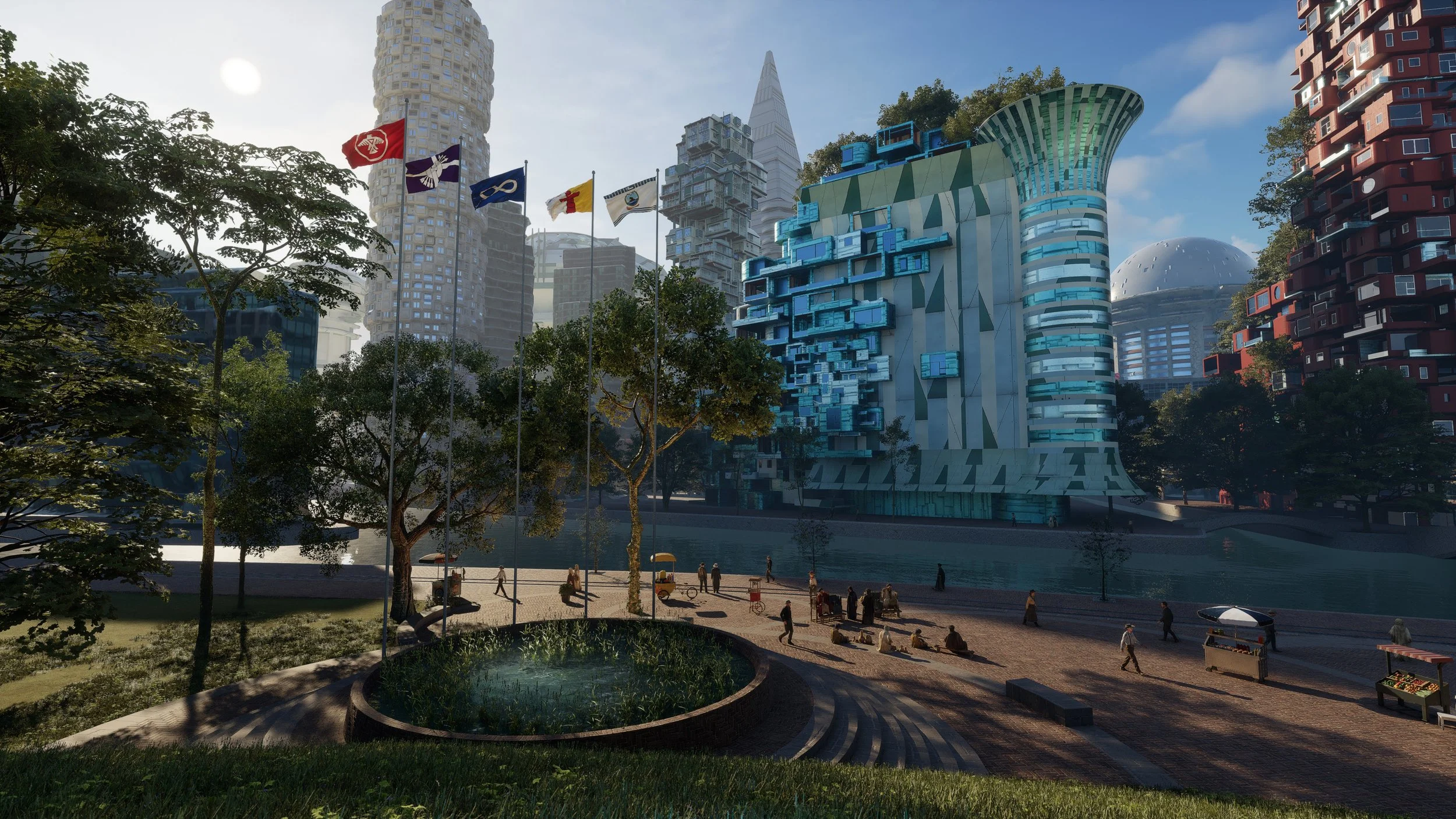
An envisioned Future Toronto from Fort York facing south.
There are so many people who helped make this project a reality.
First and foremost, we would like to thank Cheryl Blackman for championing this first-of-its-kind project, and bringing it to the Digital Museum of Canada.
During her time leading the Toronto History Museums, Cheryl brilliantly highlighted some of the most impressively diverse artists, and beautifully decolonial projects that ‘Toronto the Good’ has ever seen. The projects that she championed, like the “Awakenings” series, thoughtfully and poignantly met that cultural moment.
Thank you to Alexandra Kim and the entire Toronto History Museums for leading this project.
We would like to thank Peter Pavement and Amy Heatherington and the entire Surface Impression Team for taking our artwork, and an unbelievable amount of educational content and creating such an amazing virtual experience out of it all. You folks are the best!
Many thanks to Audrey Rochette for her guidance, care and wisdom.
Where the Water Met the Land’s incredible team of Indigenous Advisors and Writers was led by Tobie Loukes. Tobie, Thank you so much for bringing so much creativity, energy and thought to this project.
Thank you to the entire team of writers also including, Luana Harper-Shirt, Tim Reynolds, Natasha Gleeson, Robert Durocher, Melissa Nelson, Jacqueline Scott, Carrington Christmas, Samm Griffin, and Heather Hepburn.
Special thanks to Travis Hill, April Nicolle, our teacher focus group participants, and all of our workshop participants.
The incredible workshops that we ran with kids to inspire the future views were created and run by Heather Hepburn; Thank you so much for everything you did for this project, Heather.
We could not have done this without you!
And last but most certainly not least, a huge Thank You to the Digital Museum of Canada, who made this virtual experience a reality; and Merci Beaucoup to Brigitte and Michael for their wonderful guidance throughout this mammoth of a project.